
Botanical Ingredient
Yarrow, White
Achillea millefolium
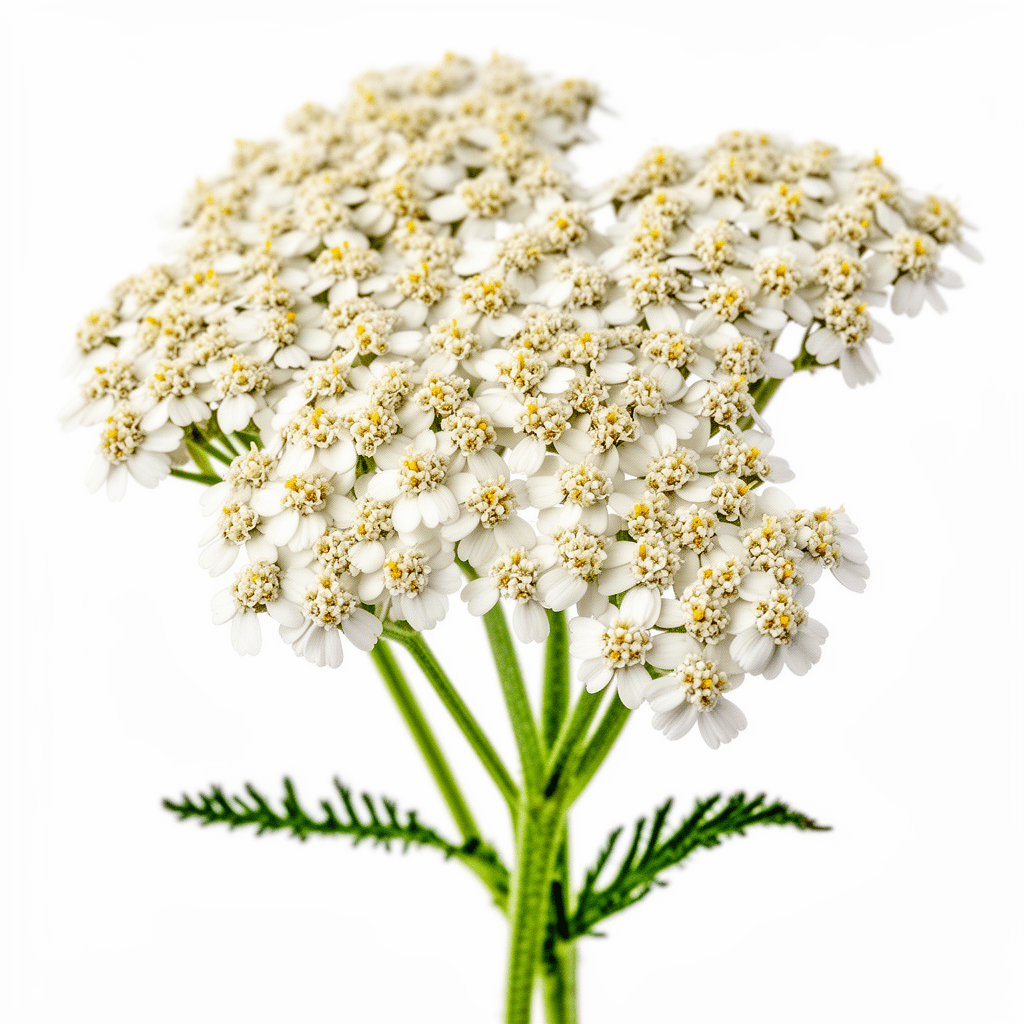
White yarrow (Achillea millefolium) is one of the oldest medicinal herbs on record — its use has been documented for over 60,000 years, evidenced by yarrow pollen found with Neanderthal remains at a burial site in Shanidar Cave, Iraq. Named for Achilles, who legend holds used it to staunch the wounds of his soldiers, yarrow remains one of the finest wound herbs in the botanical world. Its active compounds — achillin, azulene, and flavonoids — are strongly anti-inflammatory, antimicrobial, and hemostatic.
Traditional Uses
- Wound healing and staunching bleeding across global traditions
- Anti-inflammatory poultice for bruises, sprains, and skin irritation
- Traditional fever herb across European and Native American medicine
- Antimicrobial topical for minor infections
- Skin-calming treatment for eczema and irritated skin
Key Properties
Did You Know
Yarrow's botanical name, Achillea, refers to the Greek hero Achilles. Ancient accounts describe him using yarrow to treat the wounds of his soldiers during the Trojan War — a tradition echoed across countless cultures on every continent where the plant grows wild.
Our Sourcing
White yarrow grows abundantly in InVine's Florida garden, naturalizing freely once established. We harvest the aerial parts — leaves and flower heads — during full bloom when azulene and flavonoid content peak. The plant's feathery foliage and flat-topped white flower clusters are unmistakable in the garden.
Why We Use It
[Janice to complete] Why white yarrow earns its place in the garden and what drew you to grow it.