
Botanical Ingredient
Horseradish
Armoracia rusticana
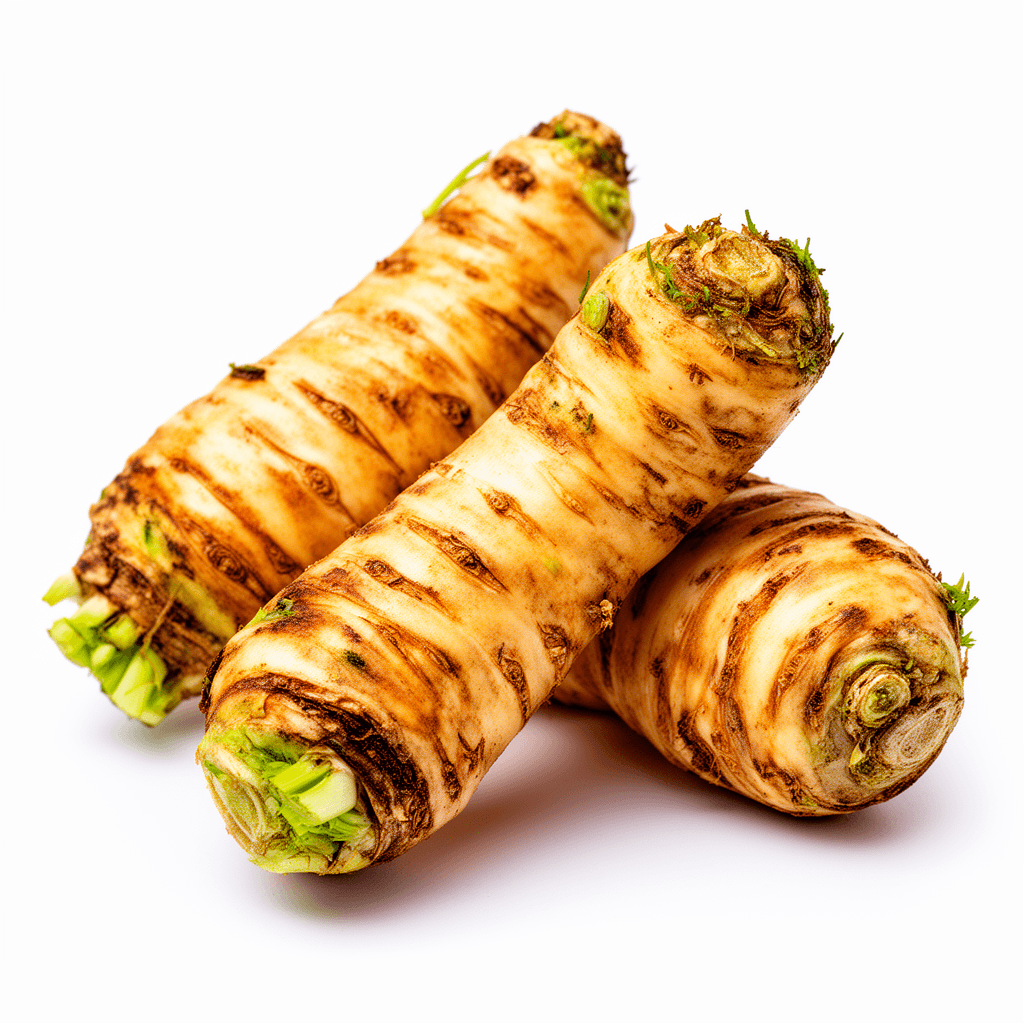
Horseradish is a bold, pungent root herb in the Brassicaceae family, native to southeastern Europe and western Asia. Its potency comes from sinigrin, a glucosinolate that converts to allyl isothiocyanate when the root is cut — the volatile compound responsible for its sharp, sinus-clearing heat. Topically, horseradish has been used in traditional European herbalism as a circulatory stimulant and warming agent for muscle and joint pain.
Traditional Uses
- Warming poultice for sore muscles and joints
- Circulatory stimulant for topical blood flow
- Traditional decongestant and sinus support
- Antimicrobial skin applications
- European folk remedy for rheumatic complaints
Key Properties
Our Sourcing
Horseradish is grown in InVine's Florida garden. The roots are harvested in cooler months when the allyl isothiocyanate content is most concentrated, then processed fresh for maximum potency.
Why We Use It
[Janice to complete] Why horseradish earns its place in the garden and what drew you to grow it.