Botanical Ingredient
Elderberry
Sambucus nigra
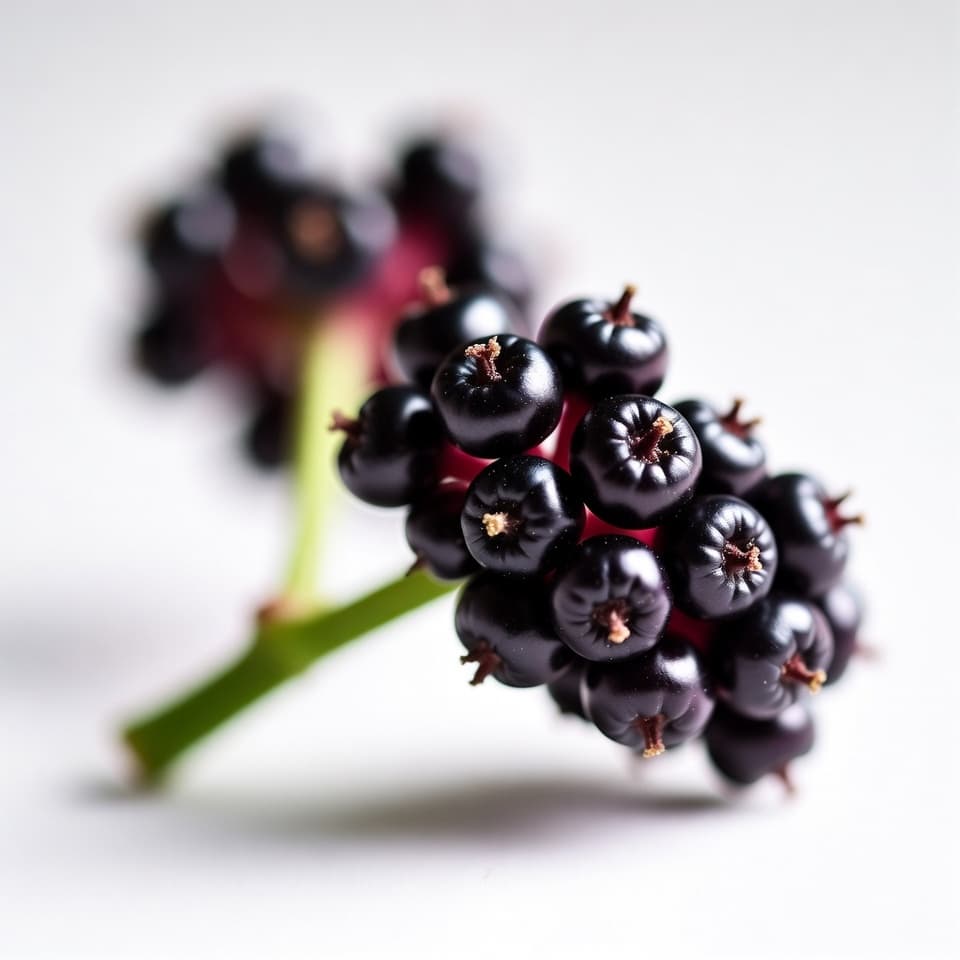
Elderberry (Sambucus nigra) is one of the most widely used medicinal plants in European folk medicine, documented in herbal texts from Hippocrates through the medieval period and still among the most researched botanical medicines today. The berries are rich in anthocyanins — particularly cyanidin-3-glucoside and cyanidin-3-sambubioside — potent antioxidants with antiviral, anti-inflammatory, and immunomodulatory activity. The flowers are equally valuable, containing flavonoids and triterpenes that support skin health and have been used in topical preparations for centuries.
Traditional Uses
- Immune support and antiviral defense in European folk medicine
- Elder flower skin rinse for complexion and inflammation
- Traditional fever remedy across European and Native American traditions
- Topical anti-inflammatory for skin conditions
- Antioxidant support for cellular health
Key Properties
Did You Know
Every part of the elder has a traditional use: flowers for skin and fever, berries for immunity, bark as a purgative, and leaves as a topical anti-inflammatory — making it one of the most complete medicinal plants in the European tradition.
Our Sourcing
Elderberry is grown in InVine's Florida garden where the shrub establishes readily in the warm, humid climate. We harvest the flowers in spring and the ripe berries in late summer, drying each at optimal timing to preserve their active constituents.
Why We Use It
[Janice to complete] Why elderberry earns its place in the garden and what drew you to grow it.