
Botanical Ingredient
Cilantro
Coriandrum sativum
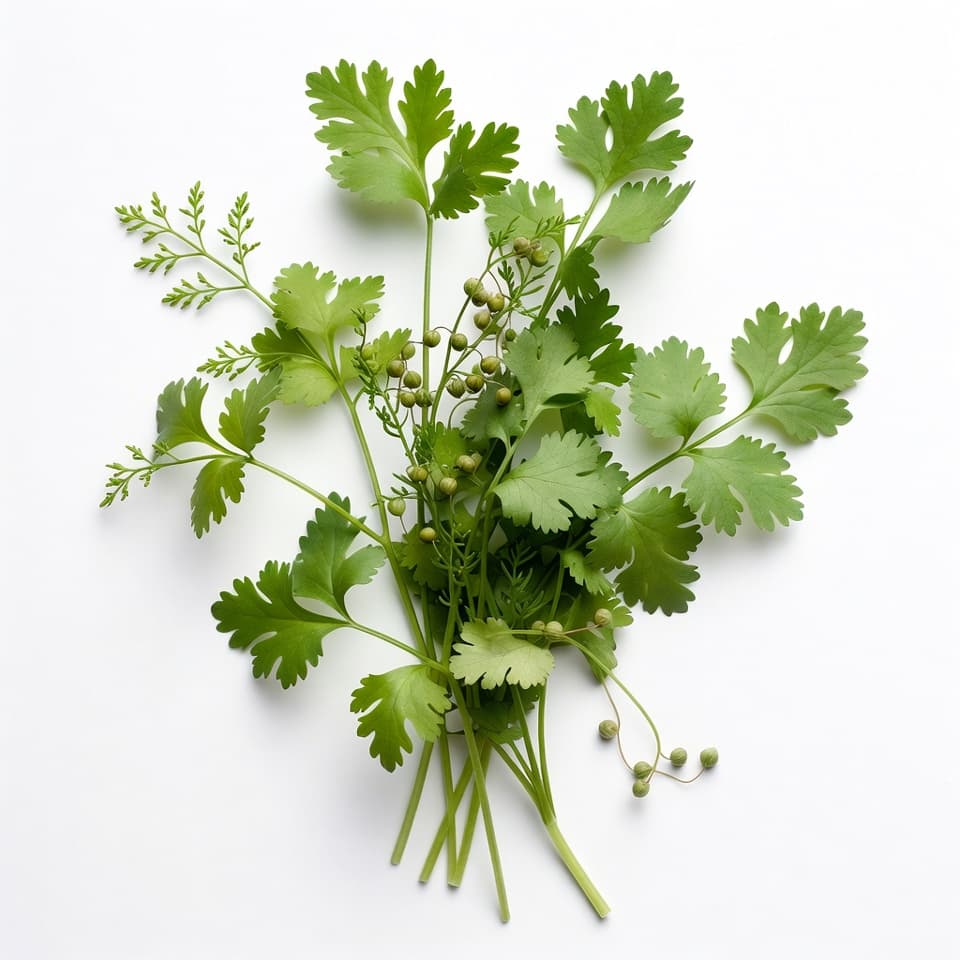
Cilantro is the leafy herb form of the coriander plant, a member of the Apiaceae family with a history of culinary and medicinal use spanning thousands of years across Asia, the Middle East, and Latin America. The leaves are rich in flavonoids, linalool, and camphor — compounds with documented antimicrobial, anti-inflammatory, and antioxidant action. In InVine's Florida garden, cilantro grows as a cool-season crop during the winter months, thriving in Tallahassee's mild winters when summer herbs go dormant.
Traditional Uses
- Traditional digestive herb across many cultures
- Antimicrobial applications in Ayurvedic medicine
- Topical anti-inflammatory in traditional Mexican herbalism
- Antioxidant skin support
- Heavy metal chelation in modern herbal practice
Key Properties
Did You Know
Cilantro is one of the few herbs documented in ancient Egyptian, Sanskrit, and Hebrew texts — it appears in the Ebers Papyrus (c. 1550 BCE) as both a medicinal and culinary plant.
Our Sourcing
Cilantro is a winter crop in InVine's Florida garden — planted in the fall and harvested through the cooler months when it thrives without bolting. Florida's mild winters create the slow, steady growth that concentrates its aromatic oils. We harvest the leaves fresh and dry them gently before use.
Why We Use It
[Janice to complete] Why cilantro earns its place in the winter garden and what drew you to grow it.